
Back to catalog
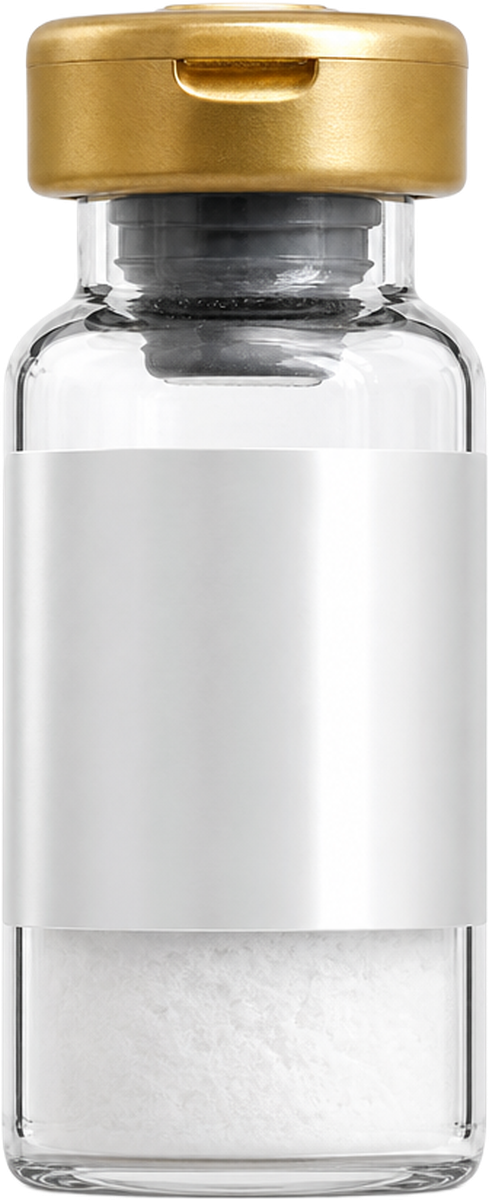
KLOW Stack 3ml vial label
RecoveryPurity 99.0%+
Product profile

KLOW Stack

KPV + GHK-Cu + TB-500 + BPC-157 — expanded regenerative + anti-inflammatory research stack.

99.0%+
Purity
Lyophilized
Form
USA
Origin
-20°C
Storage
Research Use Only. Not for human or veterinary consumption, diagnostic, or therapeutic use.

What it is

The KLOW Stack extends the Glow protocol with KPV (the C-terminal tripeptide of α-MSH) to introduce melanocortin-mediated anti-inflammatory signaling alongside GHK-Cu, TB-500 and BPC-157 in soft-tissue and mucosal-repair research.

Pathway Diagram

Mechanism of Action

CRL · MOA-01

KPV inhibits NF-κB nuclear translocation and pro-inflammatory cytokine release; GHK-Cu drives matrix remodeling; BPC-157 promotes angiogenesis via VEGFR2-Akt-eNOS; TB-500 supports cell migration through actin sequestration. The four peptides span anti-inflammatory, vascular, cytoskeletal and ECM axes of repair.

  1. Step 01
    Receptor Binding

    Peptide engages target receptor with high affinity.

  2. Step 02
    Signal Cascade

    Downstream intracellular pathways activate.

  3. Step 03
    Cellular Response

    Gene expression and protein synthesis shift.

  4. Step 04
    Observed Outcome

    Measurable change in the studied biomarker.

Primary TargetsMulti-pathway tissue-repair modelingInflammatory-bowel & mucosal-repair researchDermal & connective-tissue remodeling

Research highlights

Four-peptide research stack: KPV + GHK-Cu + TB-500 + BPC-157.
KPV (α-MSH 11–13) suppresses NF-κB-driven cytokine release in epithelial and immune-cell research.
GHK-Cu, TB-500 and BPC-157 cover ECM remodeling, cytoskeletal dynamics and angiogenesis respectively.
Investigated in mucosal-repair, IBD-modeling and soft-tissue regeneration research.

Pharmacology snapshot

KPV 414.5 Da · GHK-Cu 403.9 Da · BPC-157 1419.5 Da · TB-500 ~889 Da
Molecular weight
KPV minutes · GHK-Cu rapid · BPC-157 ~4 h · TB-500 ~2–3 h (research)
Half-life
Oral (KPV via PepT1) or SC for others (research)
Route (research)

Potential research applications

Multi-pathway tissue-repair modeling
Inflammatory-bowel & mucosal-repair research
Dermal & connective-tissue remodeling
Cytokine-modulation studies

Case studies

In vivo7 days

KPV PepT1-mediated intestinal anti-inflammation

Cohort: DSS-colitis mouse model

Oral tripeptide KPV uptake via PepT1 in colonic epithelial and immune cells under DSS-induced colitis.

Outcome

Reduced inflammation, lower pro-inflammatory cytokine expression and improved colonic histology vs. control.

Dalmasso et al., Gastroenterology 2008;134(1):166–178
In vitro

GHK-Cu regenerative transcriptome

Cohort: Fibroblast & keratinocyte panels

Synthesis of GHK-Cu's modulation of regenerative pathways across cell types.

Outcome

Broad activation of repair, ECM-remodeling and antioxidant gene programs.

Pickart & Margolina, IJMS 2018;19(7):1987
PreclinicalMulti-week

BPC-157 GI ulcer & lesion protection

Cohort: Rodent ulcer & colitis models

Review of BPC-157's reproducible mucosal protective effect across independent laboratories.

Outcome

Consistent acceleration of lesion resolution across cysteamine, ethanol and indomethacin models.

Sikiric et al., Curr Pharm Des 2018;24(18):1992–2001
Handling Protocol

Storage Guidelines

CRL · STR-02

Store lyophilized at -20°C, protected from light. Reconstituted vials: 2–8°C, use within 30 days for research.

Lyophilized
-20°C
Long-term, 24 months
Reconstituted
2–8°C
Refrigerated, 28 days
Light Exposure
Protect
Store in dark vial
Diluent
BAC Water
Sterile, 0.9% benzyl
Best practice — reconstitute with bacteriostatic water, swirl gently, do not shake.
Regulatory Notice

Research Disclaimer

CRL · REG-03
Research Use Only

Strictly for in-vitro laboratory and research investigations.

Not For Human Use

Not approved for diagnostic, therapeutic, or veterinary application.

Qualified Personnel

Handling restricted to licensed researchers and laboratory staff.

Warning — KLOW Stack is supplied solely for legitimate laboratory research. Any administration to humans or animals is strictly prohibited and may violate federal, state, or local law. By purchasing, the researcher accepts full responsibility for safe handling, storage, and lawful use.

Document · CRL-REG-03Revision 2026.06 · Clinical Research Labs
Representative Literature

Citations & References

CRL · REF-04
  1. 01
    Dalmasso G, Charrier-Hisamuddin L, Nguyen HTT, et al. · 2008
    PepT1-mediated tripeptide KPV uptake reduces intestinal inflammation
    Gastroenterology. 134(1):166–178.
  2. 03
    Sikiric P, Seiwerth S, Rucman R, et al. · 2018
    Stable gastric pentadecapeptide BPC 157: novel therapy in gastrointestinal tract
    Current Pharmaceutical Design. 24(18):1992–2001.
  3. 04
    Goldstein AL, Hannappel E, Kleinman HK. · 2005
    Thymosin beta4: actin-sequestering protein moonlights to repair injured tissues
    Trends in Molecular Medicine. 11(9):421–429.
References are representative of peer-reviewed literature and are provided for research context only.
Document · CRL-REF-04Revision 2026.06 · Clinical Research Labs