
Back to catalog
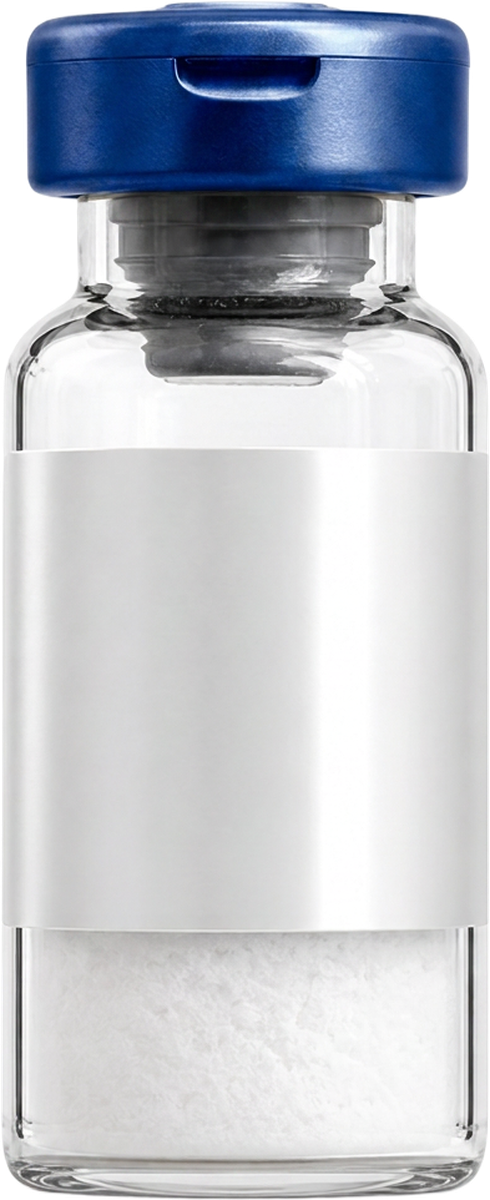
Ipamorelin 3ml vial label
Growth HormonePurity 99.4%
Product profile

Ipamorelin

Selective ghrelin/GHS receptor agonist.

99.4%
Purity
Lyophilized
Form
-20°C
Storage
Research Use Only. Not for human or veterinary consumption, diagnostic, or therapeutic use.

What it is

Ipamorelin is a pentapeptide selective ghrelin/growth-hormone secretagogue used in research of pulsatile GH release.

Pathway Diagram

Mechanism of Action

CRL · MOA-01

Selective agonism of GHS-R1a triggers GH release without significant cortisol or prolactin elevation in in-vitro models.

  1. Step 01
    Receptor Binding

    Peptide engages target receptor with high affinity.

  2. Step 02
    Signal Cascade

    Downstream intracellular pathways activate.

  3. Step 03
    Cellular Response

    Gene expression and protein synthesis shift.

  4. Step 04
    Observed Outcome

    Measurable change in the studied biomarker.

Primary TargetsSelective GH release researchReceptor binding studiesPulsatility modeling

Research highlights

Selective GHS-R1a agonist — pulsatile GH release without ACTH/prolactin/cortisol spikes.
Bone-mineral content increases in rodent models suggest anabolic potential.
Investigated for post-operative ileus in human phase-2 work.
Short half-life supports pulsatile dosing in research designs.

Pharmacology snapshot

711.9 Da
Molecular weight
~2 hours
Half-life
SC (research)
Route (research)
Sequence
Aib-His-D-2-Nal-D-Phe-Lys-NH2

Potential research applications

Selective GH release research
Receptor binding studies
Pulsatility modeling

Case studies

PreclinicalAcute & subchronic

Selective GH-secretagogue characterization

Cohort: Rat & swine models

Original pharmacology paper establishing receptor selectivity across endocrine axes.

Outcome

Dose-dependent GH release with no ACTH, cortisol, FSH or LH stimulation vs. GHRP-6.

Raun et al., Eur J Endocrinol 1998;139(5):552–561
In vivo13 weeks

Bone mineral content in adult rats

Cohort: Adult female rats

Long-term ipamorelin administration measured against vehicle on bone density.

Outcome

Significant increase in cortical bone mineral content vs. controls.

Svensson et al., J Endocrinol 2000;165(3):569–577
ClinicalUp to 7 days

Postoperative ileus phase 2

Cohort: 114 post-laparotomy patients

Proof-of-concept RCT of ipamorelin as a ghrelin mimetic for GI motility recovery.

Outcome

Shortened time to first bowel movement and tolerated solid food earlier than placebo.

Beck et al., J Gastrointest Surg 2014;18(10):1849–1859
Handling Protocol

Storage Guidelines

CRL · STR-02

Lyophilized -20°C. Reconstituted: 2–8°C, 30 days.

Lyophilized
-20°C
Long-term, 24 months
Reconstituted
2–8°C
Refrigerated, 28 days
Light Exposure
Protect
Store in dark vial
Diluent
BAC Water
Sterile, 0.9% benzyl
Best practice — reconstitute with bacteriostatic water, swirl gently, do not shake.
Regulatory Notice

Research Disclaimer

CRL · REG-03
Research Use Only

Strictly for in-vitro laboratory and research investigations.

Not For Human Use

Not approved for diagnostic, therapeutic, or veterinary application.

Qualified Personnel

Handling restricted to licensed researchers and laboratory staff.

Warning — Ipamorelin is supplied solely for legitimate laboratory research. Any administration to humans or animals is strictly prohibited and may violate federal, state, or local law. By purchasing, the researcher accepts full responsibility for safe handling, storage, and lawful use.

Document · CRL-REG-03Revision 2026.06 · Clinical Research Labs
Representative Literature

Citations & References

CRL · REF-04
  1. 01
    Raun K, Hansen BS, Johansen NL, et al. · 1998
    Ipamorelin, the first selective growth hormone secretagogue
    European Journal of Endocrinology. 139(5):552–561.
  2. 03
    Beck DE, Sweeney WB, McCarter MD, Ipamorelin 201 Study Group. · 2014
    Prospective, randomized, controlled, proof-of-concept study of the ghrelin mimetic ipamorelin for the management of postoperative ileus
    Journal of Gastrointestinal Surgery. 18(10):1849–1859.
References are representative of peer-reviewed literature and are provided for research context only.
Document · CRL-REF-04Revision 2026.06 · Clinical Research Labs