
Back to catalog
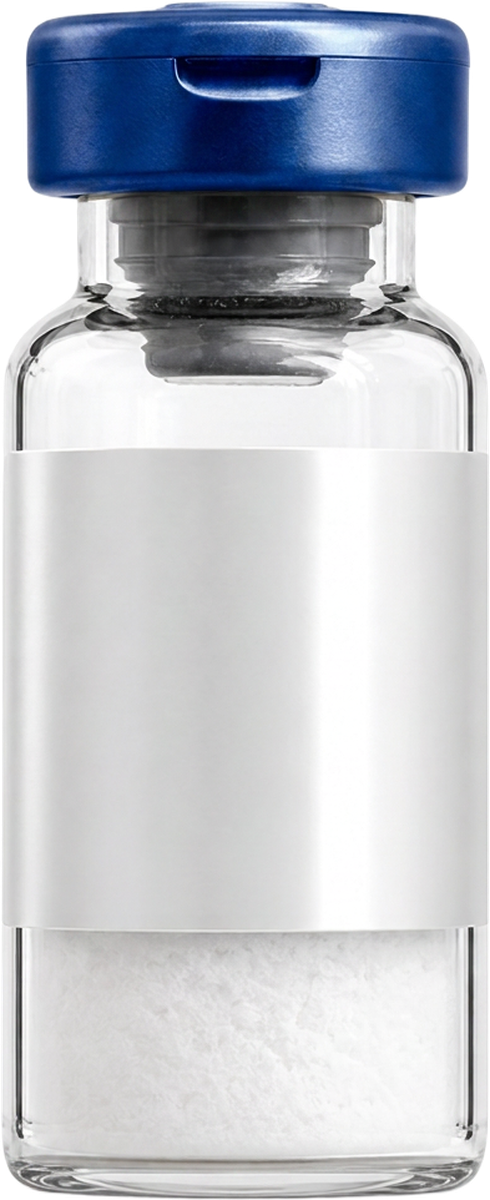
IGF-DES 3ml vial label
Growth HormonePurity 99.0%
Product profile

IGF-DES

Truncated IGF-1 analogue with selective local activity.

99.0%
Purity
Lyophilized
Form
-20°C
Storage
Research Use Only. Not for human or veterinary consumption, diagnostic, or therapeutic use.

What it is

IGF-DES (Des(1-3)IGF-1) is a truncated IGF-1 analogue lacking the first three N-terminal residues, with markedly reduced IGFBP binding and enhanced local potency.

Pathway Diagram

Mechanism of Action

CRL · MOA-01

Binds IGF-1R with similar affinity to IGF-1 but escapes IGFBP sequestration, producing enhanced local signaling.

  1. Step 01
    Receptor Binding

    Peptide engages target receptor with high affinity.

  2. Step 02
    Signal Cascade

    Downstream intracellular pathways activate.

  3. Step 03
    Cellular Response

    Gene expression and protein synthesis shift.

  4. Step 04
    Observed Outcome

    Measurable change in the studied biomarker.

Primary TargetsLocalized myogenic researchNeurite outgrowth studiesReceptor-binding pharmacology

Research highlights

Truncated IGF-1 lacking N-terminal Gly-Pro-Glu residues.
Markedly reduced IGFBP binding — concentrated local activity.
Up to 10× more potent than native IGF-1 in cell-based assays.
Used in localized myogenic and neurite-outgrowth research.

Pharmacology snapshot

7,375 Da
Molecular weight
Short systemic; potent local activity
Half-life
SC / IM (research)
Route (research)

Potential research applications

Localized myogenic research
Neurite outgrowth studies
Receptor-binding pharmacology
Cell culture

Case studies

Preclinical

Des(1-3)IGF-I characterization

Cohort: Cross-model synthesis

Reviewed structural and functional characterization of Des(1-3)IGF-I.

Outcome

Established enhanced local potency due to IGFBP escape.

Ballard et al., Int J Biochem Cell Biol 1996;28(10):1085–1087
Preclinical

IGF in bovine colostrum

Cohort: Bovine cohort

Sequenced and characterized colostral IGF-1/IGF-2 including truncated forms.

Outcome

Documented natural occurrence of Des(1-3) species with enhanced bioactivity.

Francis et al., Biochem J 1988;251(1):95–103
In vitro

Serum generation of Des(1-3)IGF-1

Cohort: Serum proteolysis assays

Identified acid-protease pathway generating Des(1-3) species from IGF-1.

Outcome

Confirmed enzymatic mechanism producing Des(1-3) variant in vivo.

Yamamoto & Murphy, Endocrinology 1995;136(11):4767–4772
Handling Protocol

Storage Guidelines

CRL · STR-02

Lyophilized -20°C.

Lyophilized
-20°C
Long-term, 24 months
Reconstituted
2–8°C
Refrigerated, 28 days
Light Exposure
Protect
Store in dark vial
Diluent
BAC Water
Sterile, 0.9% benzyl
Best practice — reconstitute with bacteriostatic water, swirl gently, do not shake.
Regulatory Notice

Research Disclaimer

CRL · REG-03
Research Use Only

Strictly for in-vitro laboratory and research investigations.

Not For Human Use

Not approved for diagnostic, therapeutic, or veterinary application.

Qualified Personnel

Handling restricted to licensed researchers and laboratory staff.

Warning — IGF-DES is supplied solely for legitimate laboratory research. Any administration to humans or animals is strictly prohibited and may violate federal, state, or local law. By purchasing, the researcher accepts full responsibility for safe handling, storage, and lawful use.

Document · CRL-REG-03Revision 2026.06 · Clinical Research Labs
Representative Literature

Citations & References

CRL · REF-04
  1. 01
    Ballard FJ, Wallace JC, Francis GL, et al. · 1996
    Des(1-3)IGF-I: a truncated form of insulin-like growth factor-I
    Int J Biochem Cell Biol. 28(10):1085–1087.
References are representative of peer-reviewed literature and are provided for research context only.
Document · CRL-REF-04Revision 2026.06 · Clinical Research Labs