
Back to catalog
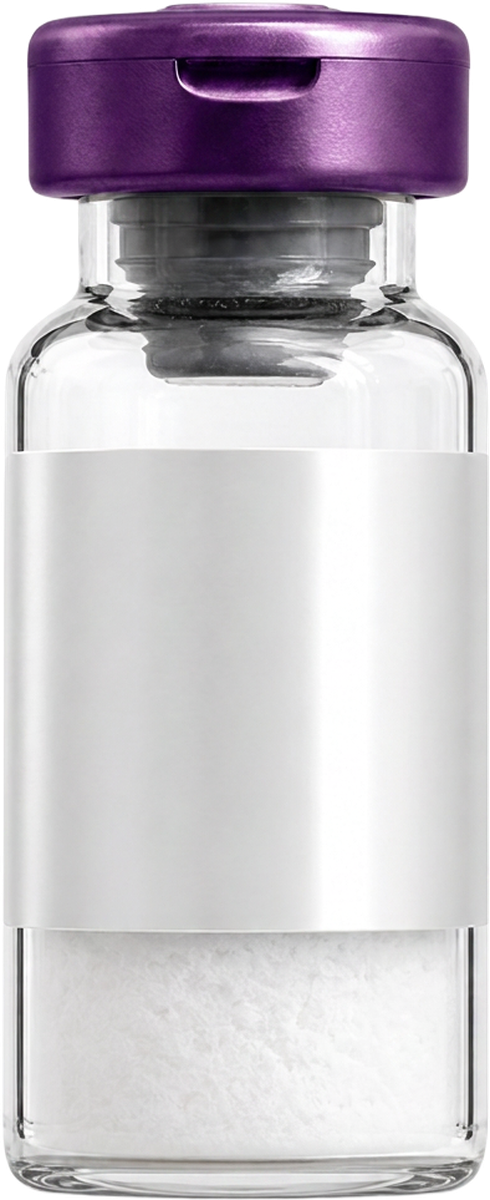
Glow Stack 3ml vial label
Skin & AestheticPurity 99.0%+
Product profile

Glow Stack

GHK-Cu + TB-500 + BPC-157 — dermal & soft-tissue regenerative research stack.

99.0%+
Purity
Lyophilized
Form
USA
Origin
-20°C
Storage
Research Use Only. Not for human or veterinary consumption, diagnostic, or therapeutic use.

What it is

The Glow Stack combines the copper-binding tripeptide GHK-Cu with TB-500 and BPC-157 to model extracellular-matrix remodeling, dermal regeneration and antioxidant response in fibroblast and wound-healing research.

Pathway Diagram

Mechanism of Action

CRL · MOA-01

GHK-Cu modulates >4,000 genes governing collagen, elastin and decorin synthesis; BPC-157 drives VEGFR2-mediated angiogenesis; TB-500 supports actin dynamics and endothelial migration. The triad creates parallel structural, vascular and antioxidant inputs to dermal repair models.

  1. Step 01
    Receptor Binding

    Peptide engages target receptor with high affinity.

  2. Step 02
    Signal Cascade

    Downstream intracellular pathways activate.

  3. Step 03
    Cellular Response

    Gene expression and protein synthesis shift.

  4. Step 04
    Observed Outcome

    Measurable change in the studied biomarker.

Primary TargetsDermal regeneration & collagen-synthesis studiesWound-closure and re-epithelialization modelsExtracellular-matrix remodeling research

Research highlights

Combines GHK-Cu (regenerative tripeptide-copper complex) with BPC-157 and TB-500 for triadic dermal repair signaling.
GHK-Cu modulates >4,000 genes governing collagen, elastin and decorin in fibroblasts.
BPC-157 drives angiogenesis; TB-500 supports endothelial migration via actin sequestration.
Investigated for dermal regeneration, wound-closure and ECM-remodeling research — not for cosmetic or therapeutic use.

Pharmacology snapshot

GHK-Cu 403.9 Da · BPC-157 1419.5 Da · TB-500 ~889 Da
Molecular weight
GHK-Cu rapid clearance · BPC-157 ~4 h · TB-500 ~2–3 h (research)
Half-life
Subcutaneous or topical formulation (research)
Route (research)

Potential research applications

Dermal regeneration & collagen-synthesis studies
Wound-closure and re-epithelialization models
Extracellular-matrix remodeling research
Antioxidant-pathway activation

Case studies

In vitro

GHK-Cu regenerative gene modulation

Cohort: Fibroblast & keratinocyte panels

Transcriptomic synthesis of GHK-Cu effects across regenerative pathways.

Outcome

Broad activation of repair, antioxidant and ECM-remodeling gene networks.

Pickart & Margolina, IJMS 2018;19(7):1987
In vivo21 days

BPC-157 alkali-burn wound healing

Cohort: Rat dermal burn + HUVEC

Systemic and topical BPC-157 on full-thickness burns with parallel angiogenesis assays.

Outcome

Faster re-epithelialization and capillary density vs. control.

Huang et al., Drug Des Devel Ther 2015;9:2485–2499
PreclinicalMulti-week

Thymosin β4 multi-tissue repair

Cohort: Cardiac, dermal & corneal models

Review of Tβ4 (and fragment) pro-migratory and pro-angiogenic activity across tissues.

Outcome

Documented consistent enhancement of cell migration and tissue regeneration.

Goldstein, Hannappel & Kleinman, Trends Mol Med 2005;11(9):421–429
Handling Protocol

Storage Guidelines

CRL · STR-02

Store lyophilized vials at -20°C, light-protected. Reconstituted: 2–8°C, single research cycle within 30 days.

Lyophilized
-20°C
Long-term, 24 months
Reconstituted
2–8°C
Refrigerated, 28 days
Light Exposure
Protect
Store in dark vial
Diluent
BAC Water
Sterile, 0.9% benzyl
Best practice — reconstitute with bacteriostatic water, swirl gently, do not shake.
Regulatory Notice

Research Disclaimer

CRL · REG-03
Research Use Only

Strictly for in-vitro laboratory and research investigations.

Not For Human Use

Not approved for diagnostic, therapeutic, or veterinary application.

Qualified Personnel

Handling restricted to licensed researchers and laboratory staff.

Warning — Glow Stack is supplied solely for legitimate laboratory research. Any administration to humans or animals is strictly prohibited and may violate federal, state, or local law. By purchasing, the researcher accepts full responsibility for safe handling, storage, and lawful use.

Document · CRL-REG-03Revision 2026.06 · Clinical Research Labs
Representative Literature

Citations & References

CRL · REF-04
  1. 02
    Huang T, Zhang K, Sun L, et al. · 2015
    Body protective compound-157 enhances alkali-burn wound healing in vivo
    Drug Design, Development and Therapy. 9:2485–2499.
  2. 03
    Goldstein AL, Hannappel E, Kleinman HK. · 2005
    Thymosin beta4: actin-sequestering protein moonlights to repair injured tissues
    Trends in Molecular Medicine. 11(9):421–429.
References are representative of peer-reviewed literature and are provided for research context only.
Document · CRL-REF-04Revision 2026.06 · Clinical Research Labs