
Back to catalog
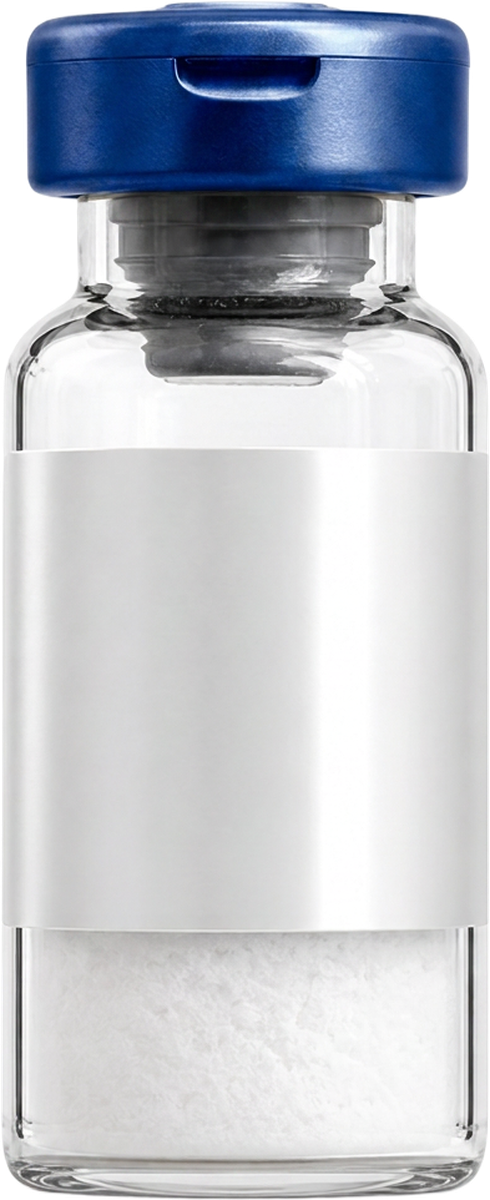
GHRP-6 3ml vial label
Growth HormonePurity 99.1%
Product profile

GHRP-6

Hexapeptide ghrelin-receptor agonist for GH release research.

99.1%
Purity
Lyophilized
Form
-20°C
Storage
Research Use Only. Not for human or veterinary consumption, diagnostic, or therapeutic use.

What it is

GHRP-6 is a hexapeptide growth-hormone secretagogue acting at the ghrelin/GHS-R1a receptor, used in research of pulsatile GH release and appetite signaling.

Pathway Diagram

Mechanism of Action

CRL · MOA-01

Selective GHS-R1a agonism stimulates pituitary GH release and central appetite pathways.

  1. Step 01
    Receptor Binding

    Peptide engages target receptor with high affinity.

  2. Step 02
    Signal Cascade

    Downstream intracellular pathways activate.

  3. Step 03
    Cellular Response

    Gene expression and protein synthesis shift.

  4. Step 04
    Observed Outcome

    Measurable change in the studied biomarker.

Primary TargetsGH secretagogue researchAppetite & ghrelin pathway studiesCardioprotection models

Research highlights

First-generation GH secretagogue acting at GHS-R1a.
Robust GH release with modest cortisol/prolactin elevation.
Stimulates appetite via central ghrelin-pathway activation.
Investigated for cardiac cytoprotection in ischemia models.

Pharmacology snapshot

873.0 Da
Molecular weight
~30 minutes
Half-life
SC / IV (research)
Route (research)
Sequence
His-D-Trp-Ala-Trp-D-Phe-Lys-NH2

Potential research applications

GH secretagogue research
Appetite & ghrelin pathway studies
Cardioprotection models
Receptor binding

Case studies

PreclinicalAcute

Discovery of GH-releasing hexapeptide

Cohort: Pituitary cell culture & rats

First publication describing in-vitro and in-vivo activity of GHRP-6.

Outcome

Specific dose-dependent GH release without TSH/ACTH stimulation.

Bowers et al., Endocrinology 1984;114(5):1537–1545
Preclinical

Peptidomimetic GH-secretagogue review

Cohort: Multi-model synthesis

Comprehensive review of GHS class including GHRP-6 pharmacology.

Outcome

Established GHS-R1a as orphan receptor mediating ghrelin-like activity.

Smith et al., Endocr Rev 1997;18(5):621–645
Preclinical

GHRP cytoprotection appraisal

Cohort: Cardiac & multi-organ models

Historical review of GHRP cytoprotective effects in ischemia.

Outcome

Consistent cardioprotection signals across rodent and large-animal models.

Berlanga-Acosta et al., Clin Med Insights Cardiol 2017;11
Handling Protocol

Storage Guidelines

CRL · STR-02

Lyophilized -20°C. Reconstituted: 2–8°C, 30 days.

Lyophilized
-20°C
Long-term, 24 months
Reconstituted
2–8°C
Refrigerated, 28 days
Light Exposure
Protect
Store in dark vial
Diluent
BAC Water
Sterile, 0.9% benzyl
Best practice — reconstitute with bacteriostatic water, swirl gently, do not shake.
Regulatory Notice

Research Disclaimer

CRL · REG-03
Research Use Only

Strictly for in-vitro laboratory and research investigations.

Not For Human Use

Not approved for diagnostic, therapeutic, or veterinary application.

Qualified Personnel

Handling restricted to licensed researchers and laboratory staff.

Warning — GHRP-6 is supplied solely for legitimate laboratory research. Any administration to humans or animals is strictly prohibited and may violate federal, state, or local law. By purchasing, the researcher accepts full responsibility for safe handling, storage, and lawful use.

Document · CRL-REG-03Revision 2026.06 · Clinical Research Labs
Representative Literature

Citations & References

CRL · REF-04
  1. 02
    Smith RG, Van der Ploeg LH, Howard AD, et al. · 1997
    Peptidomimetic regulation of growth hormone secretion
    Endocr Rev. 18(5):621–645.
References are representative of peer-reviewed literature and are provided for research context only.
Document · CRL-REF-04Revision 2026.06 · Clinical Research Labs