
Back to catalog
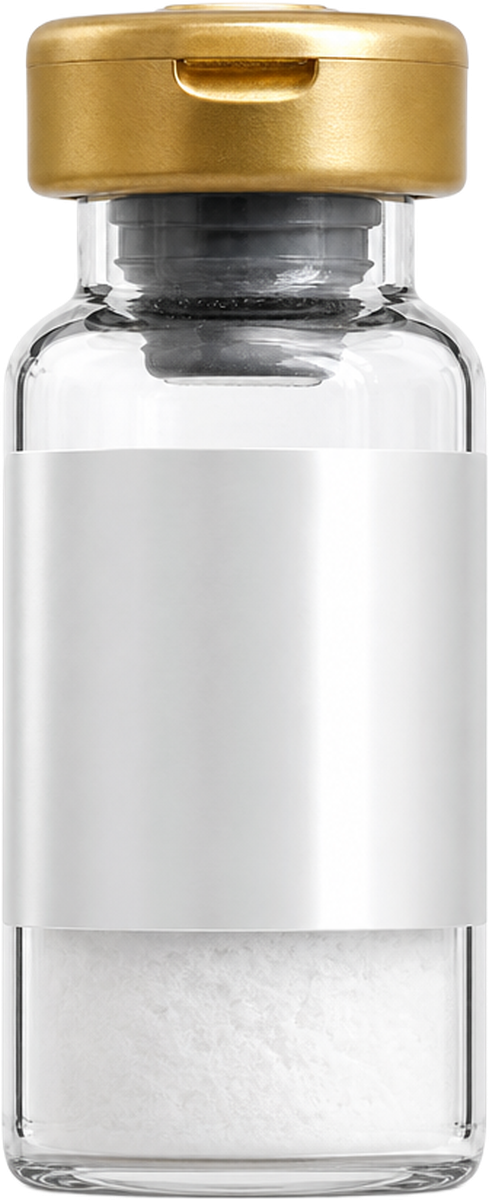
GHK-Cu 3ml vial label
RecoveryPurity 99.5%
Product profile

GHK-Cu

Copper tripeptide-1 for regenerative research.

99.5%
Purity
Lyophilized
Form
-20°C
Storage
Research Use Only. Not for human or veterinary consumption, diagnostic, or therapeutic use.

What it is

GHK-Cu is a naturally occurring copper-binding tripeptide studied in skin and extracellular-matrix research.

Pathway Diagram

Mechanism of Action

CRL · MOA-01

Modulates expression of genes related to tissue remodeling and copper transport in fibroblast cultures.

  1. Step 01
    Receptor Binding

    Peptide engages target receptor with high affinity.

  2. Step 02
    Signal Cascade

    Downstream intracellular pathways activate.

  3. Step 03
    Cellular Response

    Gene expression and protein synthesis shift.

  4. Step 04
    Observed Outcome

    Measurable change in the studied biomarker.

Primary TargetsECM remodelingFibroblast researchAntioxidant pathway studies

Research highlights

Endogenous copper-binding tripeptide; plasma levels decline with age.
Modulates >4000 genes related to tissue remodeling and antioxidant defense.
Stimulates collagen, elastin and glycosaminoglycan synthesis in fibroblasts.
Investigated topically and parenterally in skin and wound research.

Pharmacology snapshot

340.4 Da (peptide) / 403.9 Da (Cu complex)
Molecular weight
Short (rapid clearance)
Half-life
Topical / SC (research)
Route (research)
Sequence
Gly-His-Lys (Cu²⁺)

Potential research applications

ECM remodeling
Fibroblast research
Antioxidant pathway studies

Case studies

In vitro

Regenerative gene modulation review

Cohort: Fibroblast & keratinocyte panels

Synthesized transcriptomic evidence of GHK-Cu modulation across regenerative pathways.

Outcome

Documented broad activation of repair, antioxidant, and ECM-remodeling gene networks.

Pickart & Margolina, IJMS 2018;19(7):1987
In vitroWeeks

Multi-pathway skin regeneration

Cohort: Human skin equivalents

Comprehensive characterization across collagen, elastin and antioxidant assays.

Outcome

Increased collagen/elastin production and dermal density with up-regulation of decorin.

Pickart et al., BioMed Res Int 2015;2015:648108
Observational12 weeks

Comparative dermal ultrastructure

Cohort: Topical formulation panel

Electron-microscopic comparison of vitamin C, GHK-Cu cream, melatonin, and tretinoin on skin ultrastructure.

Outcome

GHK-Cu produced ECM remodeling distinct from retinoid-mediated changes.

Abdulghani et al., Dis Manage Clin Outcomes 1998;1(4):136–141
Handling Protocol

Storage Guidelines

CRL · STR-02

Lyophilized -20°C. Reconstituted: refrigerate, use within 30 days.

Lyophilized
-20°C
Long-term, 24 months
Reconstituted
2–8°C
Refrigerated, 28 days
Light Exposure
Protect
Store in dark vial
Diluent
BAC Water
Sterile, 0.9% benzyl
Best practice — reconstitute with bacteriostatic water, swirl gently, do not shake.
Regulatory Notice

Research Disclaimer

CRL · REG-03
Research Use Only

Strictly for in-vitro laboratory and research investigations.

Not For Human Use

Not approved for diagnostic, therapeutic, or veterinary application.

Qualified Personnel

Handling restricted to licensed researchers and laboratory staff.

Warning — GHK-Cu is supplied solely for legitimate laboratory research. Any administration to humans or animals is strictly prohibited and may violate federal, state, or local law. By purchasing, the researcher accepts full responsibility for safe handling, storage, and lawful use.

Document · CRL-REG-03Revision 2026.06 · Clinical Research Labs
Representative Literature

Citations & References

CRL · REF-04
  1. 02
    Pickart L, Vasquez-Soltero JM, Margolina A. · 2015
    GHK peptide as a natural modulator of multiple cellular pathways in skin regeneration
    BioMed Research International. 2015:648108.
References are representative of peer-reviewed literature and are provided for research context only.
Document · CRL-REF-04Revision 2026.06 · Clinical Research Labs