
Back to catalog
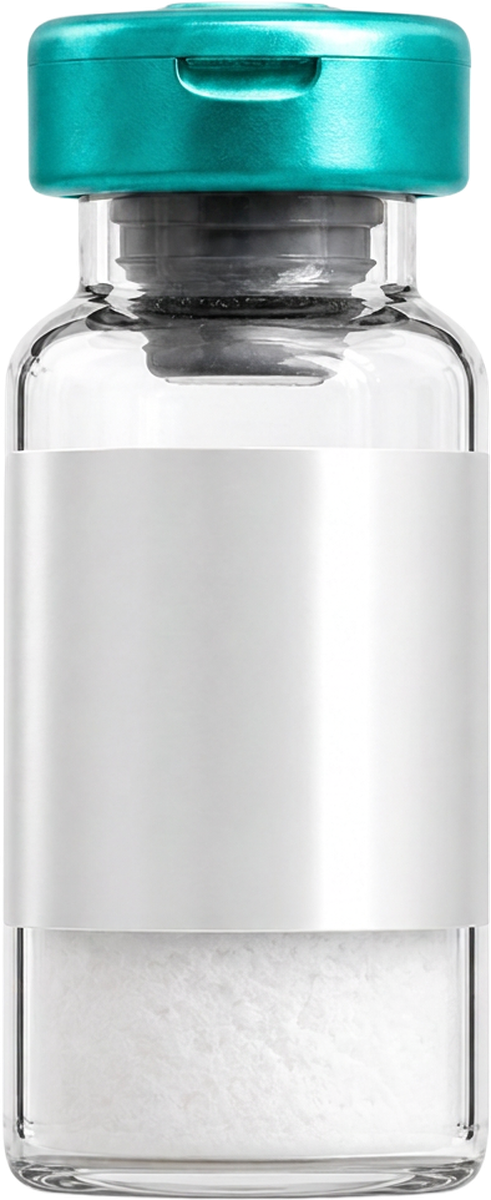
AOD-9604 3ml vial label
Weight ManagementPurity 99.0%
Product profile

AOD-9604

C-terminal fragment of hGH studied in lipolysis research.

99.0%
Purity
Lyophilized
Form
-20°C
Storage
Research Use Only. Not for human or veterinary consumption, diagnostic, or therapeutic use.

What it is

AOD-9604 is a modified C-terminal fragment of human growth hormone investigated for adipose research.

Pathway Diagram

Mechanism of Action

CRL · MOA-01

Mimics the lipolytic activity of hGH without engaging growth-related receptors in research models.

  1. Step 01
    Receptor Binding

    Peptide engages target receptor with high affinity.

  2. Step 02
    Signal Cascade

    Downstream intracellular pathways activate.

  3. Step 03
    Cellular Response

    Gene expression and protein synthesis shift.

  4. Step 04
    Observed Outcome

    Measurable change in the studied biomarker.

Primary TargetsLipolysis pathwaysAdipocyte studiesMetabolic research

Research highlights

C-terminal hGH fragment (residues 177–191) retains lipolytic activity without somatogenic effects.
Stimulates lipolysis and inhibits lipogenesis in adipocyte cultures.
Does not bind the hGH receptor — no measurable IGF-1 elevation in research models.
FDA GRAS designation in 2014 supports favorable tolerability profile.

Pharmacology snapshot

1817.1 Da
Molecular weight
~30 minutes (research models)
Half-life
Subcutaneous (research)
Route (research)
Sequence
H-Tyr-Leu-Arg-Ile-Val-Gln-Cys-Arg-Ser-Val-Glu-Gly-Ser-Cys-Gly-Phe-OH

Potential research applications

Lipolysis pathways
Adipocyte studies
Metabolic research

Case studies

In vivo14 days

Lipolytic activity in obese mouse models

Cohort: Obese (ob/ob) mice & β3-AR knockouts

Compared AOD9604 with full-length hGH on adipose mobilization across wild-type and β3-AR knockout mice.

Outcome

Significant fat mass reduction without altering food intake or lean body mass; effect preserved in β3-AR knockouts, suggesting non-β3 lipolytic pathway.

Heffernan et al., Endocrinology 2001;142(12):5182–5189
ClinicalSingle & repeat dose

Human safety & tolerability profile

Cohort: Healthy adult volunteers

Pharmacokinetic and safety study of the hexadecapeptide in humans across escalating doses.

Outcome

No serious adverse events, no impact on insulin sensitivity or IGF-1; supports GRAS designation.

Stier et al., J Endocrinol Diabetes Obes 2013;1(2):1006
In vitroAcute exposure

Synthetic lipolytic domain characterization

Cohort: Isolated adipocytes

Mapped the minimum lipolytic domain of hGH and characterized metabolic activity in adipose tissue preparations.

Outcome

Localized lipolytic activity to the C-terminal fragment; established AOD-class peptides as receptor-divergent lipolytic agents.

Ng et al., Hormone Research 2000;53(6):274–278
Handling Protocol

Storage Guidelines

CRL · STR-02

Lyophilized -20°C, light-protected.

Lyophilized
-20°C
Long-term, 24 months
Reconstituted
2–8°C
Refrigerated, 28 days
Light Exposure
Protect
Store in dark vial
Diluent
BAC Water
Sterile, 0.9% benzyl
Best practice — reconstitute with bacteriostatic water, swirl gently, do not shake.
Regulatory Notice

Research Disclaimer

CRL · REG-03
Research Use Only

Strictly for in-vitro laboratory and research investigations.

Not For Human Use

Not approved for diagnostic, therapeutic, or veterinary application.

Qualified Personnel

Handling restricted to licensed researchers and laboratory staff.

Warning — AOD-9604 is supplied solely for legitimate laboratory research. Any administration to humans or animals is strictly prohibited and may violate federal, state, or local law. By purchasing, the researcher accepts full responsibility for safe handling, storage, and lawful use.

Document · CRL-REG-03Revision 2026.06 · Clinical Research Labs
Representative Literature

Citations & References

CRL · REF-04
  1. 03
    Stier H, Vos E, Kenley D. · 2013
    Safety and tolerability of the hexadecapeptide AOD9604 in humans
    Journal of Endocrinology, Diabetes & Obesity. 1(2):1006.
References are representative of peer-reviewed literature and are provided for research context only.
Document · CRL-REF-04Revision 2026.06 · Clinical Research Labs